
Direct Answer: For CEOs and Founders seeking to optimize offshore HR services for foreign companies,…
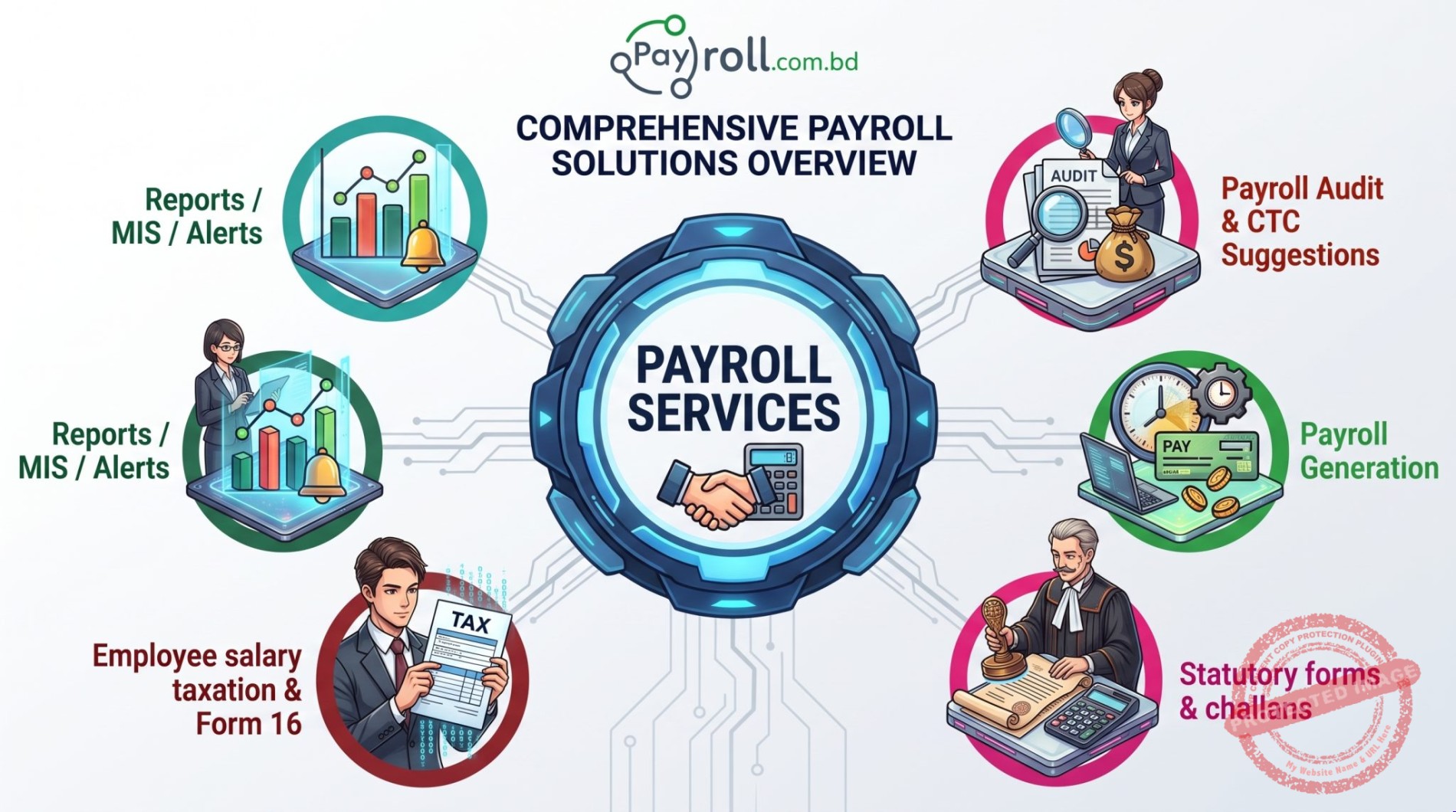
HR & Payroll Management
Direct Answer: What Is Modern HR & Payroll Management?
HR and Payroll Management is the strategic integration of workforce administration, employee lifecycle management, statutory wage calculations, and tax withholding compliance under local labor laws. Combining HR operations with automated payroll systems eliminates calculation errors, ensures timely salary disbursements, and guarantees 100% statutory compliance with National Board of Revenue (NBR) and Bangladesh Labour Act 2006 mandates.
Streamlining Enterprise Performance Through Integrated HR & Payroll Management
Managing workforce operations in today’s fast-paced corporate environment requires seamless collaboration between Human Resources and Finance departments. Historically, organizations maintained isolated HR and accounting workflows, leading to data discrepancies, delayed salary disbursements, and compliance risks. Modern enterprise management unifies employee records, attendance tracking, benefit calculations, and tax withholdings into a centralized administrative framework.
Commercial enterprises across Dhaka, Chittagong, and international regional hubs require dedicated payroll infrastructure to handle complex monthly operations. Organizations seeking complete administrative accuracy can leverage our specialized payroll processing solutions to automate wage calculations and eliminate manual computation errors.
Furthermore, foreign companies establishing regional offices or expanding global teams in Bangladesh can partner with our PEO services in Bangladesh or deploy scalable corporate structures through our Employer of Record (EOR) service in Bangladesh for complete statutory protection.
Effective HR and payroll integration impacts every phase of the employee lifecycle. From seamless onboarding and attendance verification to monthly Tax Deducted at Source (TDS) withholdings and end-of-year bonus administration, automated payroll frameworks ensure that workers are compensated accurately and punctually while maintaining full compliance with National Board of Revenue (NBR) regulations.
5 Essential Pillars of Modern HR & Payroll Management
Achieving operational excellence requires mastering five core pillars of human resource and compensation management. Specifically, the structured grid below details these vital components.
1. Statutory Wage Computation
Calculating basic wages, house rent, medical allowances, and 2x overtime rates per Bangladesh Labour Law rules.
2. Leave & Attendance Audits
Tracking accrued annual earned leave, casual leave balances, and leave encashments under Section 117 rules.
3. NBR TDS Withholding
Applying progressive NBR income tax slabs to gross taxable earnings after allowable tax exemptions.
4. Benefits & Bonus Admin
Managing festival bonuses, provident funds, gratuities, and group insurance benefits for workforce retention.
The Role of Automated Systems in HR and Payroll Synergy
Manual spreadsheet calculations expose organizations to human error, compliance penalties, and employee dissatisfaction. Automated HR and payroll platforms streamline time-and-attendance synchronization, calculate precise pro-rated salaries, and automatically apply progressive tax withholding brackets under current NBR tax regulations.
Furthermore, integrated software solutions generate automated Tax Deducted at Source (TDS) certificates (Form 57) for employees, streamline annual Form 108 return filings, and ensure all monthly salary disbursements are executed via approved banking channels to meet cashless corporate tax rate requirements (22.5%).
5-Step HR & Payroll Management Execution Framework
Following a structured management framework ensures accurate payroll closing and zero legal non-compliance. Corporate HR specialists should execute the five steps detailed below:
- Step 1: Synchronize Attendance & Leave Records — Aggregate monthly attendance, overtime hours, and approved leave days.
- Step 2: Calculate Gross Wages & Allowances — Compute basic salary, house rent allowances, conveyance, and overtime payouts.
- Step 3: Audit Monthly TDS & Statutory Deductions — Calculate and deduct exact income tax withholdings based on NBR tax brackets.
- Step 4: Execute Bank Salary Transfers & Treasury Deposit — Transfer net salaries to worker accounts and deposit withheld TDS into Treasury.
- Step 5: Generate Compliance Reports & Form 108 Returns — Maintain digital audit records and file annual employment returns with NBR.
Key Strategic Takeaway
Integrating HR operations with managed payroll software reduces monthly administrative overhead by 80% while ensuring 100% compliance with Bangladesh Labour Act 2006 and NBR tax regulations.
Manual Spreadsheet Payroll vs. Integrated Managed HR Solution Matrix
Comparing manual HR spreadsheet administration with modern managed payroll systems highlights substantial operational advantages. Specifically, the data table below contrasts key metrics.
| Management Metric | Manual Spreadsheet HR Admin | Integrated Managed HR & Payroll |
|---|---|---|
| Calculation Accuracy | Prone to formula & entry errors | 100% automated rate precision |
| NBR Tax Compliance Safety | High penalty risk from incorrect TDS | Zero-penalty NBR compliance guarantee |
| Processing Cycle Time | Requires 5-7 days of manual work | Instant calculation within minutes |
| Labour Law Audit Readiness | Fragmented paper records | Centralized audit-ready digital records |
Optimizing HR & Payroll Solutions with Payroll.com.bd
First, company founders and HR executives seeking comprehensive operational guidance can read our resource on must-know facts about payroll processing.
Second, corporate decision-makers evaluating managed HR and payroll administrative partners can explore our detailed analysis of what are the best payroll services to make an informed partner selection.
Frequently Asked Questions
What is the primary objective of integrated HR & Payroll Management?
Specifically, integrated HR and payroll management aligns workforce data with compensation processing to ensure accurate salary payouts, automated TDS tax withholdings, and full Labour Law compliance.
How does payroll automation reduce tax compliance risks?
Furthermore, automated systems apply exact NBR progressive tax brackets, track employee PSR receipts, and generate accurate Form 108 return reports without manual calculation errors.
What statutory regulations govern employee leave and wage payouts in Bangladesh?
In addition, employee compensation, overtime rates (2x basic), and earned leave encashment calculations are governed by Section 117 of the Bangladesh Labour Act 2006.
Why should growing companies outsource HR and payroll operations?
Moreover, outsourcing HR and payroll eliminates administrative overhead, ensures 100% legal compliance, and allows internal leadership to focus on core strategic business expansion.
Related Posts



Comments (0)