Direct Answer: For CEOs and Founders seeking to optimize offshore HR services for foreign companies,…
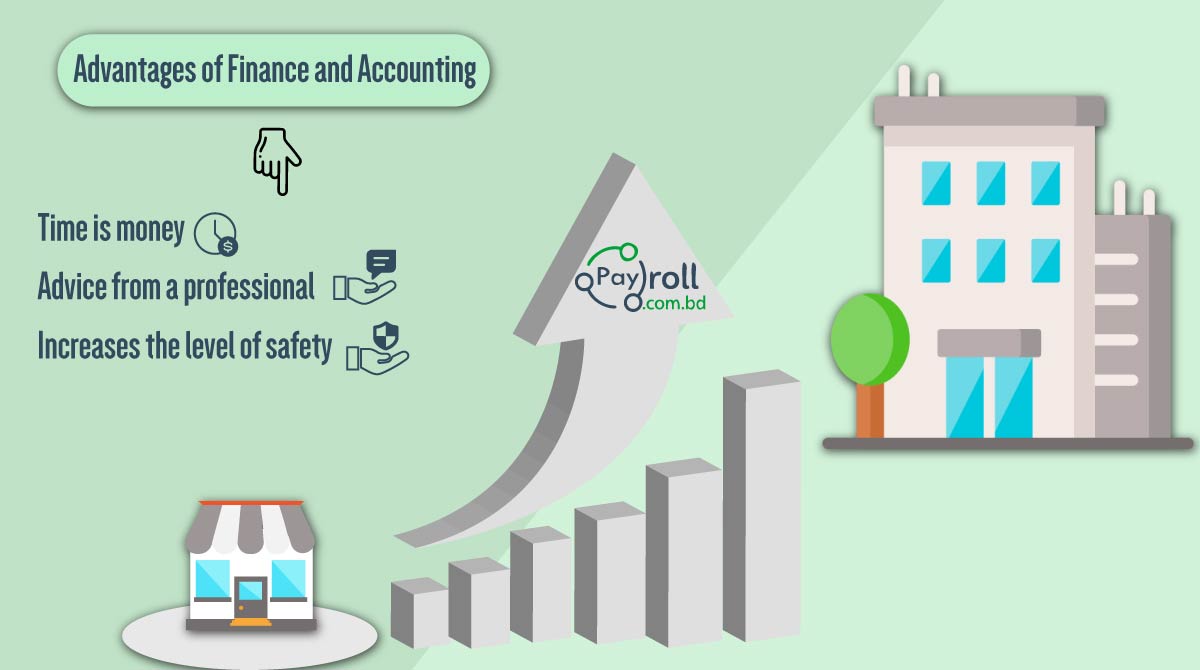
We Offer a Low-cost Finance and Accounting Business Process Outsourcing Solution
Executive Summary: Low-Cost Finance & Accounting BPO Solutions
Outsourcing finance and accounting business processes provides growing enterprises with cost-effective, audit-ready financial administration. Specifically, delegating general ledger bookkeeping, accounts payable/receivable, and payroll integration to specialized BPO partners reduces operating costs by up to 70%. Furthermore, businesses gain real-time cash flow reporting and 100% zero-penalty National Board of Revenue (NBR) tax compliance.
Navigating Low-Cost Finance & Accounting BPO Solutions
Direct Answer / BPO Financial Benchmark:
Specifically, finance and accounting BPO streamlines corporate financial administration by combining automated bookkeeping, vendor invoice processing, statutory tax withholdings, and real-time executive financial analytics under a low-cost managed model.
Specifically, finance and accounting BPO streamlines corporate financial administration by combining automated bookkeeping, vendor invoice processing, statutory tax withholdings, and real-time executive financial analytics under a low-cost managed model.
First, rapidly growing commercial enterprises across Dhaka require streamlined financial management. For instance, businesses seeking complete administrative reliability can explore our payroll processing solutions to synchronize employee salary disbursements with accounting ledgers.
Second, international corporations expanding local operations can partner with our PEO services in Bangladesh or leverage our Employer of Record (EOR) service in Bangladesh for full statutory compliance.
5 Essential Pillars of Modern Finance & Accounting BPO Services
Building an efficient financial BPO framework requires establishing five core operational pillars. Specifically, the five structured cards below detail these vital responsibilities.
Finance BPO Pillars
AP AR AUTOMATION 01
Accounts Payable & Receivable Automation
Specifically, streamlining vendor invoice processing, customer collections, and payment reconciliations.
BOOKKEEPING LEDGER 02
General Ledger & Financial Bookkeeping
Furthermore, maintaining accurate, audit-ready daily journal entries and bank statement reconciliations.
STATUTORY TDS 03
Statutory TDS & NBR Tax Compliance
In addition, computing monthly Tax Deducted at Source (TDS), VAT withholdings, and statutory challan filings.
CASH FLOW REPORTING 04
Financial Statement & Cash Flow Reporting
Moreover, generating monthly P&L statements, balance sheets, and cash flow forecasts for executive leadership.
PAYROLL INTEGRATION 05
Integrated Payroll & HR Accounting
Therefore, synchronizing monthly salary disbursements, bonus provisions, and employee tax withholdings seamlessly.
Key Financial Risk Management & Governance Framework
Establishing a strong financial governance framework protects organizations against cash flow volatility, accounting errors, and regulatory penalties. Specifically, corporate finance teams implement three essential risk management controls.
Financial Control Indicators
First, automated general ledger reconciliation prevents accounting discrepancies between bank statements and internal ledgers. For instance, daily automated reconciliation flags unauthorized disbursements and duplicate payments instantly.
Second, statutory tax withholding monitoring guarantees strict adherence to National Board of Revenue (NBR) rules. Furthermore, automated TDS calculation engines ensure accurate tax deductions on supplier invoices and employee compensation.
Third, secure cloud data storage protects corporate financial records from local hardware failure and unauthorized access. Consequently, BPO partners deploy AES-256 cloud encryption, multi-factor authentication, and daily off-site backups.
5-Step Finance & Accounting BPO Transition Roadmap
Transitioning from in-house accounting to an outsourced BPO model requires a structured roadmap. Specifically, corporate leaders should follow the five steps below.
Transition Roadmap
FINANCIAL AUDIT 01
Audit Current Accounting Workflows & Bottlenecks
Specifically, evaluating manual spreadsheet error rates, invoice processing speeds, and tax compliance gaps.
PROVIDER SELECTION 02
Select Accounting BPO Partner & Security Review
Furthermore, verifying provider ISO security credentials, NDA non-disclosure terms, and NBR tax expertise.
SYSTEM INTEGRATION 03
Integrate Cloud Accounting Software & Bank APIs
In addition, connecting general ledger software, electronic invoicing portals, and bank feeds.
PARALLEL RECONCILIATION 04
Execute Parallel Reconciliation & Tax Validation
Moreover, running parallel financial processing cycles to verify journal entry accuracy and TDS precision.
FULL BPO LAUNCH 05
Launch Full BPO Services & Executive Reporting
Therefore, deploying live financial management and receiving real-time executive dashboard reporting.
Best Practices for Financial BPO Operational Management
Maximizing the operational value of an accounting BPO relationship requires clear execution guidelines. Specifically, enterprise leaders adopt three critical management best practices.
Operational Management Guidelines
First, standardizing chart of accounts parameters ensures consistent journal entry classification across departments. For instance, uniform expense coding simplifies monthly financial statement consolidation and tax reporting.
Second, scheduling monthly financial review meetings fosters open communication between internal leadership and BPO account managers. Furthermore, reviewing monthly cash flow forecasts helps executives optimize working capital allocations.
Third, maintaining digital documentation workflows reduces paper overhead and speeds up audit preparation. Consequently, cloud document repositories allow instant access to vendor invoices, tax challans, and bank statements.
In-House Accounting Department vs. Outsourced Finance BPO Model Matrix
Comparing internal accounting departments against managed BPO models highlights clear financial advantages. Specifically, the data table below contrasts key operational metrics.
Financial Model Matrix
| Operational Dimension | Traditional In-House Accounting | Low-Cost Finance & Accounting BPO |
|---|---|---|
| Monthly Overhead & Staff Costs | Specifically, high full-time accounting salaries & benefits. | Up to 70% cost reduction with flexible pricing. |
| Accounting Software & Tech Licensing | Furthermore, expensive ERP licenses & server maintenance. | Zero software maintenance & included cloud HRIS. |
| Statutory NBR Tax & Compliance Safety | In addition, manual calculation errors & late filing fines. | Guaranteed 100% zero-penalty NBR compliance. |
| Financial Reporting Speed | Moreover, delayed month-end closing & P&L statements. | Real-time executive reporting & analytics. |
5 Key Benefits of Low-Cost Finance & Accounting BPO Outsourcing
Adopting a low-cost accounting BPO solution delivers transformative corporate advantages. Specifically, the five cards below detail these key benefits.
BPO Benefits
OVERHEAD REDUCTION 01
70% Reduction in Financial Overhead
Specifically, eliminating full-time accounting salaries, office space costs, and specialized software fees.
ZERO PENALTY TAX 02
100% Zero-Penalty Statutory NBR Tax Safety
Furthermore, protecting corporate capital from late tax filing penalties and audit discrepancies.
DATA ENCRYPTION 03
Bank-Grade Data Privacy & Cloud Security
In addition, safeguarding sensitive corporate ledgers with AES-256 cloud encryption protocols.
SCALABLE INFRASTRUCTURE 04
Scalable Enterprise Financial Infrastructure
Moreover, handling expanding transaction volumes seamlessly without increasing internal administrative staff.
CASH FLOW ANALYTICS 05
Real-Time Executive Cash Flow Analytics
Therefore, generating instant financial dashboards, P&L reporting, and cash flow forecasts for leadership.
Optimizing HR Solutions with Payroll.com.bd
First, company leaders seeking complete statutory rules can read our resource on must-know facts about payroll processing.
Resource Links & Service Comparisons
Second, corporate executives evaluating payroll management options can review our detailed analysis on what are the best payroll services to make an optimal choice.
Frequently Asked Questions
Common Finance BPO Questions
How does finance and accounting BPO reduce operational overhead?
Specifically, outsourcing financial bookkeeping and accounts payable eliminates full-time accounting salaries, software licensing fees, and specialized IT infrastructure costs.
Can finance and accounting BPO integrate with payroll processing?
Furthermore, modern accounting BPO solutions seamlessly integrate monthly employee payroll disbursements, salary TDS withholdings, and general ledger journal entries.
How do BPO providers maintain financial data security?
In addition, reputable BPO platforms utilize AES-256 cloud encryption, multi-factor authentication, and strict confidentiality protocols to safeguard corporate financial ledgers.
How does BPO outsourcing ensure statutory NBR tax compliance?
Moreover, specialized accounting teams manage monthly Tax Deducted at Source (TDS) filings, corporate income tax schedules, and annual Form 57 returns for zero-penalty safety.
Related Posts