

Payroll and HR BPO Services in Bangladesh
PayrollBD runs payroll and HR record work for employers in Bangladesh: wage calculation and disbursement, appointment letters, service books, the register of workers, attendance checks and the filings that follow each wage period. It is business process outsourcing under a written contract: PayrollBD holds the registers an Inspector may call for and hands every record back to the employer when the engagement ends.
Why Use a Provider?
Employers move a function offsite when the work is rule-bound, repeats on a fixed cycle, and leaves a record that has to survive an inspection.
Payroll, attendance and the wage register all fit that description, because the rules are written down, the dates are set by statute, and the format of the record is not a matter of preference. None of it needs a judgement call once the calendar has been agreed.
Kept in house, the same work needs a team sized for the heaviest month of the year and idle through the quietest. Moved to payroll outsourcing services, the same work is paid for by the cycle actually processed. The statutory duty stays exactly where the law puts it.
The employer keeps the decision on headcount and pay, and the provider keeps the clock, the calculation and the paperwork that sits behind both.

Why do foreign companies trust PayrollBD?
PayrollBD has run payroll in Bangladesh since 2007. PayrollBD serves 57+ client companies. PayrollBD’s payroll pays 867+ employees each month. These figures come from PayrollBD’s own payroll and client records. One of those clients is a company headquartered in Japan. PayrollBD runs its onboarding and transition, its monthly payroll and its day-to-day employee support for 48+ employees in Bangladesh. The full case is on the managed payroll services page. Another client, an apparel manufacturer headquartered in Vietnam, hired a 35-person team in Bangladesh in 21 days through PayrollBD; that case is on the PEO services page.
What Does the Engagement Cover?
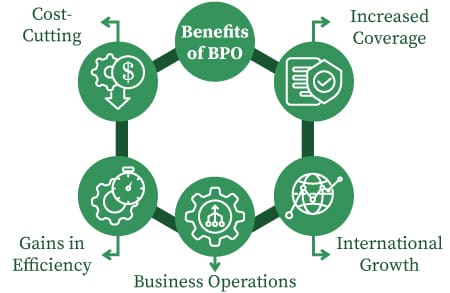
A BPO engagement with PayrollBD covers the cycle work an employer in Bangladesh must finish on a fixed calendar. That means appointment records, the service book, the register of workers, wage calculation, disbursement and the filings that follow. The panels below set out what moving that work changes for the employer.





Which Tasks Sit Inside the Scope?
The provider does the task and holds the record; the employer keeps the right to decide and the duty to comply. The table below draws that boundary function by function, so a question about who does what has a written answer.
| Function | Performed by PayrollBD | Retained by the employer |
|---|---|---|
| Appointment | Draft the letter, open the service book | Approve the hire and sign the letter |
| Payroll run | Calculate wages, build the disbursement file | Fund the account, authorise release |
| Records | Maintain the worker and wage registers | Own the records, produce them on demand |
| Filings | Prepare the return and track the due date | Sign and submit in its own name |
Where a line is not written into the table, it stays with the employer by default.
Who Carries the Statutory Duty?
The employer carries the duty in every case, because outsourcing moves the work and not the obligation.
Sections 5, 6(1) and 9(1) of the Bangladesh Labour Act 2006 name the employer as the party who must issue the appointment letter, provide the service book, and keep the register of workers open to the Inspector. PayrollBD does those tasks and keeps the proof in the form the Inspector asks for.
| Obligation | Record it leaves | Source in the Act |
|---|---|---|
| Issue an appointment letter and identity card | Signed letter and photo identity card | Section 5 |
| Provide a service book at the employer cost | Service book held in the custody of the employer | Section 6(1) and 6(2) |
| Maintain a register of workers | Register open to the Inspector in working hours | Section 9(1) |
| Pay wages inside the wage period rule | Dated disbursement record per wage period | Section 123(1) |
The wording of each section is published in Bangla by the Ministry of Law on the Laws of Bangladesh site.
How Does the Handover Run?
Handover runs in five stages, and each one closes with a document the employer can point to. Nothing moves to the next stage until the record from the last one exists. A gap is then visible on the day it happens, not at the end of a quarter.
- 1Scope and boundary. The functions moving across are listed in a schedule, with the retained duties named beside them.
- 2Record intake. Appointment letters, service books and the register of workers are collected and checked against the current headcount.
- 3Calendar build. Each wage period, filing and review date is fixed against the deadlines in the Act, then agreed in writing.
- 4Parallel cycle. One full cycle is processed beside the existing method, and the two outputs are compared line by line.
- 5Live run and review. The provider runs the cycle, and a booked review checks the register, the disbursement record and the filing proof.
The same five stages apply where the scope is a professional employer organisation arrangement rather than a back-office contract.
How Do You Assess a Provider?
Ask for the register formats a provider keeps, the deadline calendar it works to, and the name of the person who signs each review. The same three checks apply whether the scope is payroll, sourcing and procurement outsourcing, or the whole back office.
Compare the record formats
Ask each provider to show the register of workers format, the wage register format and the service book template it keeps. Read the register of workers against the particulars section 9(2) of the Bangladesh Labour Act 2006 requires it to record. A provider that cannot show the format on request will not produce the record on inspection.
Check the deadline calendar
Ask for the calendar the provider works to and read the dates against section 123 of the Bangladesh Labour Act 2006. Wages are paid within seven working days after the wage period closes, and all wages payable on termination within thirty working days after employment ends. A calendar that does not name those two dates was not built from the statute.
Read the contract boundary
Have the contract read for the line between doing a task and carrying the duty. The employer stays the party the Department of Inspection for Factories and Establishments deals with. The contract should say which records the provider holds, how fast it releases them, and what happens to them when the engagement ends.
When Do Wages Fall Due?
Two dates in section 123 of the Bangladesh Labour Act 2006 govern every payroll calendar in the country. Both are counted in working days and not in calendar days. A provider builds the cycle backwards from them, so that approval, funding and release each hold a slot before the statutory date arrives.
| Event | Statutory deadline | Provision |
|---|---|---|
| Wage period ends | Within seven working days after it ends | Section 123(1) |
| Employment ends | Within thirty working days after it ends | Section 123(2) |
| Any wage payment | Made on a working day | Section 123(3) |
| A worker is engaged | Appointment letter given on appointment; photo identity card given to every worker employed | Section 5 |
Each wage date is counted in working days, so the calendar is built from the working-day count and not from the month end.
What Records Does It Produce?
Each stage of the engagement leaves a document behind, and that set of documents is what an employer actually receives. The list below names the record types PayrollBD keeps for an engagement in Bangladesh. Each one is handed back in full when the contract ends.
- Appointment letterGiven to every worker on appointment, since section 5 of the Bangladesh Labour Act 2006 bars employing a worker without one; the same section requires a photo identity card for every worker employed.
- Service bookOpened at the employer cost and held in the custody of the employer, as section 6(1) and 6(2) of the Bangladesh Labour Act 2006 direct.
- Register of workersKept current and open to the Inspector during working hours under section 9(1) of the Bangladesh Labour Act 2006.
- Wage registerDated against each wage period alongside the disbursement record, so the section 123 count can be checked.
- Filing proofAcknowledgement copies filed by date, so a request from the Department of Inspection for Factories and Establishments is answered from the file.
The same record discipline runs through our accounting and bookkeeping services, where the ledger is the record that has to hold.
What Do Employers Ask?
Under a BPO contract the employer pays for the cycles actually processed, not for a team staffed for the heaviest month. Six questions come up in almost every first conversation about moving a back-office function to a provider in Bangladesh. The answers below state the position first and the reason second, and they include the one limit an employer should know before signing.
How is PayrollBD accountable?
Accountability runs through the contract and the record set, not through a claim. The engagement schedule names each task the provider does, the record it leaves and the date it is due, and the employer can call for any of those records at any time.
The statutory duties in sections 5, 6 and 9 of the Bangladesh Labour Act 2006 stay with the employer, so the provider answers for the work and the proof, while the employer stays the party the Inspector deals with.
What does the BPO scope cover?
The scope covers the cycle work an employer must finish on a fixed calendar. That means payroll calculation and disbursement records, the register of workers, service books, appointment documentation, attendance checks, back-office data processing and the filings that follow each period.
Client service, inbound and outbound contact handling, and procurement support run under the same contract where an employer asks for them. Anything needing a decision on headcount, pay structure or contract terms stays with the employer.
Who signs the appointment letter under a BPO contract?
The employer signs it, because the employer approves the hire. PayrollBD drafts the letter and opens the service book that goes with it.
Section 5 of the Bangladesh Labour Act 2006 places the duty to issue the letter and the identity card on the employer, so the signature cannot move to the provider.
Which sectors does BPO serve?
PayrollBD runs back-office and payroll work for employers in banking and finance, energy and utilities, healthcare, insurance, retail and e-commerce, technology, media, communications, travel and hospitality, and manufacturing.
The sector changes the vocabulary rather than the obligation, because the register of workers, the service book and the wage calendar read the same way in every one of them. Here is the honest limit: a sector licence or a regulator filing outside employment law stays with the employer, because the provider is not the licence holder.
How does an engagement start?
An engagement starts with a scope call and a record review, in that order. The employer sends the current headcount and the record formats in use, and PayrollBD returns a draft schedule naming which tasks move across and which duties stay.
From there the sequence follows the five handover stages: scope and boundary, record intake, calendar build, parallel cycle, live run and review. Reach the team on +(88) 01511 002341 or at info@payroll.com.bd to open the first review.
When must wages be paid in Bangladesh?
Wages for a wage period must be paid within seven working days after the period ends, under section 123(1) of the Bangladesh Labour Act 2006.
Where employment ends, all wages payable must be paid within thirty working days after it ends, under section 123(2). Both counts run in working days.
Reviewed by Eicra Binte Islam, Legal & Compliance, PayrollBD.