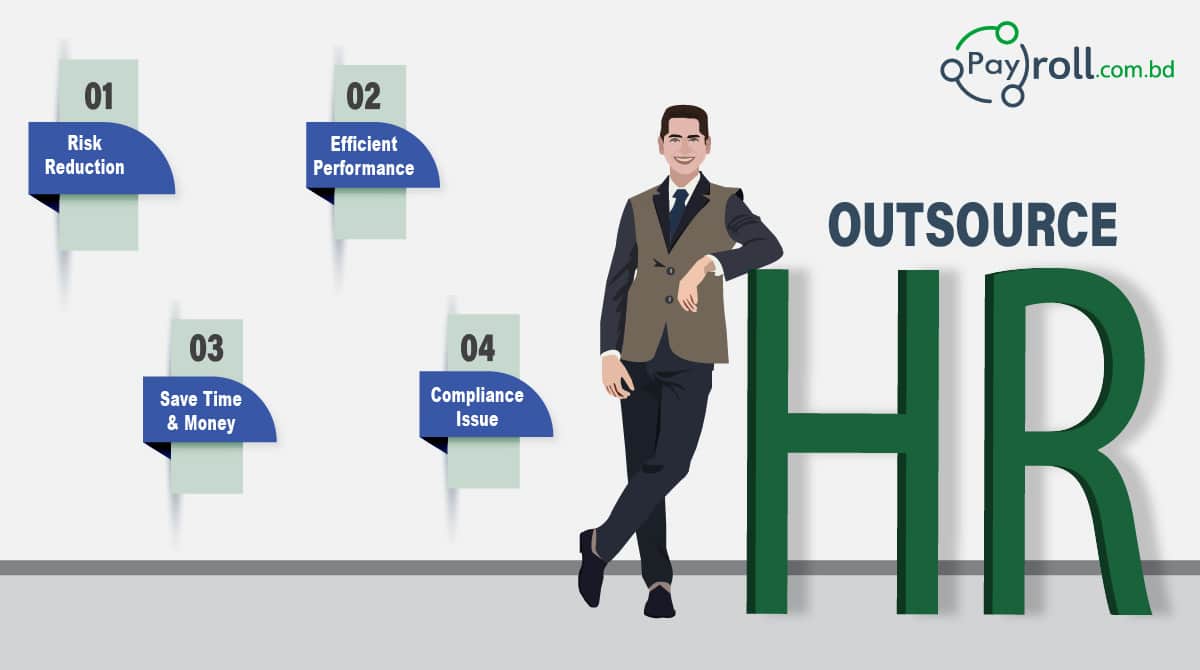
Direct Answer: For CEOs and Founders seeking to optimize offshore HR services for foreign companies,…
How Workforce Management Can Boost Your Business: Complete Guide
Executive Summary: Optimizing Business Growth via Workforce Management
In today’s fast-moving economy, managing human capital efficiently determines market competitiveness. Consequently, implementing a robust Workforce Management (WFM) strategy optimizes staff scheduling, eliminates administrative payroll bottlenecks, and reduces operational labor costs. Furthermore, data-driven workforce planning boosts overall employee productivity while guaranteeing full statutory labor law compliance in Bangladesh.
Why Workforce Management Can Boost Your Business
Direct Answer / Strategic Value:
Specifically, workforce management aligns staffing levels with real-time operational demand, ensures zero-error payroll calculation, and maximizes workforce productivity.
Specifically, workforce management aligns staffing levels with real-time operational demand, ensures zero-error payroll calculation, and maximizes workforce productivity.
First, growing organizations in Dhaka and Chattogram require structured scheduling to prevent shift conflicts. For instance, enterprises seeking complete administrative automation can combine WFM systems with our payroll processing solutions to streamline monthly compensation.
Second, foreign companies expanding operations in South Asia can partner with our PEO services in Bangladesh or leverage our Employer of Record (EOR) service in Bangladesh for full operational flexibility.
7 Steps to Implement a Successful Workforce Management Strategy
Building an efficient workforce management program requires a structured implementation roadmap. Specifically, organizations should follow the seven steps detailed below.
Implementation Roadmap
1. BUSINESS AUDIT
Understand Your Business Needs
Specifically, assess current staffing levels, analyze task requirements, and identify peak business hours.
2. CLEAR GOALS
Set Clear Operational Goals
Furthermore, define specific metrics for reducing labor expenses and enhancing customer service levels.
3. WFM SOFTWARE
Choose the Right Technology
In addition, invest in cloud WFM platforms that automate scheduling and integrate with payroll databases.
4. SCHEDULING
Optimize Staff Scheduling
Moreover, align employee shifts with customer demand patterns while respecting labor law limits.
5. PERFORMANCE
Monitor & Manage Performance
Specifically, utilize real-time analytics to track team output and deliver constructive feedback.
6. TEAM TRAINING
Train Managers and Staff
Furthermore, educate managers and employees on new portal features and automated workflow SOPs.
7. REVIEW ADJUST
Regularly Review & Adjust Strategy
Therefore, continuously audit WFM performance metrics and adjust schedules to match market changes.
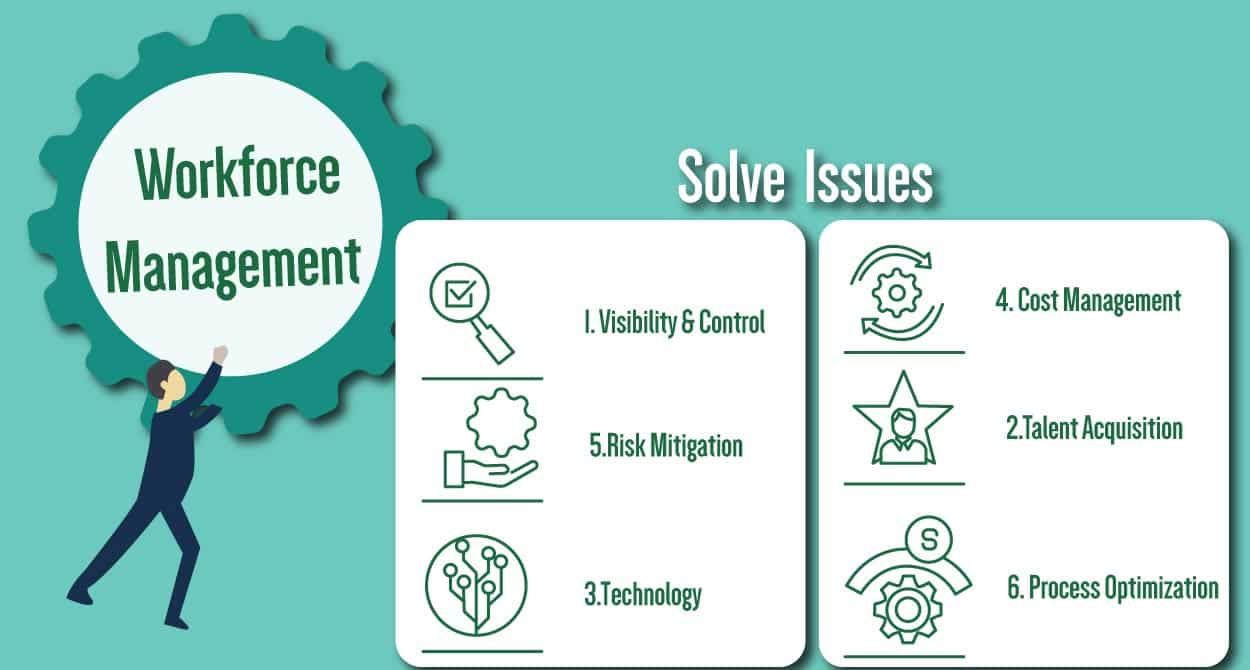
6 Operational Problem Solvers in Workforce Management
Workforce management directly resolves critical corporate bottlenecks. Specifically, the six structured cards below detail these problem-solving capabilities.
Problem Solver Pillars
VISIBILITY 01
Visibility & Workforce Control
Specifically, gaining real-time visibility into permanent and contingent staff productivity, tenure, and attendance.
TALENT STRATEGY 02
Total Talent Acquisition Strategy
Furthermore, leveraging contingent workers and specialized consultants to fill urgent skill gaps effortlessly.
TECH ADVICE 03
Unbiased Technology Selection
In addition, procuring top-tier WFM software tailored to maximize corporate return on investment (ROI).
COST CONTROL 04
Labor Spending & Cost Control
Moreover, eliminating unnecessary overtime and managing independent contractor expenses transparently.
RISK MITIGATION 05
Contingent Workforce Risk Mitigation
Therefore, preventing worker misclassification risks and co-employment liabilities through clear SOPs.
PROCESS OPTIM 06
Operational Process Optimization
Equally important, unifying fragmented HR procedures to eliminate manual data entry duplication.
6 Core Processes of Workforce Management Framework
A complete WFM system integrates critical human resource functions into a unified operational hub. Specifically, the six core processes are detailed below.
Core Process Components
BUDGETING 01
Budgeting & Labor Forecasting
Specifically, utilizing historic workload data to project future staffing needs and balance seasonal labor budgets.
SHIFT SCHEDULING 02
Automated Staff Scheduling
Furthermore, assigning shifts based on staff availability and skill sets to guarantee 24/7 coverage.
LEAVE TRACKING 03
Vacation & Leave Planning
In addition, tracking paid time off (PTO), absence calendars, and banked hours automatically.
STATUTORY AUDIT 04
Statutory Labor Compliance Tracking
Moreover, tracking mandatory certifications, training logs, and working hour limits to avoid fines.
PAYROLL INTEGRATION 05
Payroll & Benefits Syncing
Therefore, syncing digital timesheets directly with payroll calculation engines for audit-ready reporting.
PERFORMANCE AUDIT 06
Employee Performance Analytics
Equally important, measuring employee engagement metrics to drive continuous performance improvements.
Traditional Manual WFM vs. Automated Cloud WFM Platform Matrix
Comparing legacy manual scheduling with modern automated cloud WFM platforms highlights massive efficiency gains. Specifically, the data table below contrasts key operational metrics.
Operational Comparison Matrix
| Operational Dimension | Traditional Manual WFM | Automated Cloud WFM Platform |
|---|---|---|
| Shift Scheduling Speed | Specifically, consumes 10+ hours weekly in manual spreadsheet updates. | Automated shift generation in under 15 minutes. |
| Payroll Calculation Accuracy | Furthermore, high error rates from paper timesheets. | 100% accurate digital timesheet sync. |
| Absence & Tardiness Tracking | In addition, delayed reporting causes unexpected short-staffing. | Real-time attendance alerts & auto-replacement. |
| Labor Compliance Auditing | Moreover, manual tracking creates high legal penalty risks. | Automated labor rule checks & audit trails. |
8 Strategic Benefits & Helpful Workforce Management Tips
Implementing modern workforce management delivers tangible financial and cultural advantages. Specifically, the eight structured cards below outline these core benefits.
Core Strategic Benefits
1. PAYROLL AUTO
Automated Payroll Efficiency
Specifically, automating complex calculations saves time and eliminates human error during salary processing.
2. VISIBILITY AUDIT
Enhanced Managerial Visibility
Furthermore, providing leadership with real-time insights into employee engagement, attendance, and productivity.
3. COST OPTIM
Labor Cost Optimization
In addition, reducing unnecessary overtime payouts and matching staffing expenses directly to operational revenue.
4. HR EFFICIENCY
Streamlined HR Administration
Moreover, cutting administrative overhead through self-service portals and simplified digital reporting.
5. LOW TURNOVER
Reduced Absenteeism & Turnover
Therefore, fair shift distribution prevents employee burnout and lowers costly staff turnover rates.
6. LEGAL SAFETY
Full Statutory Legal Compliance
Equally important, minimizing non-compliance risks with local Bangladesh labor laws and working hour caps.
7. AGILITY
Increased Operational Agility
Specifically, enabling management to redeploy qualified staff rapidly as market demand fluctuates.
8. HIGH MORALE
Improved Employee Morale & Trust
Furthermore, transparent communication and predictable schedules foster workplace satisfaction and trust.
Optimizing WFM Solutions with Payroll.com.bd
First, company leaders seeking complete statutory rules can read our resource on must-know facts about payroll processing.
Resource Links & Service Comparisons
Second, corporate executives evaluating WFM platform providers can review our detailed analysis on what are the best payroll services to make an optimal choice.
Frequently Asked Questions
Common Workforce Management Questions
What is workforce management (WFM) in business?
Specifically, workforce management (WFM) is an organizational strategy that optimizes staff scheduling, task allocation, payroll processing, and labor compliance to maximize productivity.
How does workforce management reduce labor expenses?
Furthermore, WFM eliminates overstaffing, reduces unplanned overtime, automates attendance tracking, and optimizes shift allocations to lower operational costs.
What are the core processes of a complete WFM framework?
In addition, core processes include budgeting and forecasting, staff scheduling, leave and vacation planning, labor law compliance, payroll integration, and performance tracking.
How does automated workforce management boost employee engagement?
Moreover, automated WFM provides transparent scheduling, self-service leave portals, fair shift distribution, and timely performance feedback, boosting morale and retention.
Related Posts