

Business Process Outsourcing BPO Services
Business process outsourcing is the transfer of a defined back-office function to an external provider under a written contract. PayrollBD runs payroll, statutory record keeping and filing for employers operating in Bangladesh, holds the registers an Inspector may call for, and hands every record back to the employer when the engagement ends.
Why Use a Provider?
Employers move a function offsite when the work is rule-bound, repeats on a fixed cycle, and leaves a record that has to survive an inspection. Payroll, attendance and the wage register all fit that description, because the rules are written down, the dates are set by statute, and the format of the record is not a matter of preference. None of it needs a judgement call once the calendar has been agreed.
Kept in house, the same work needs a team sized for the heaviest month of the year and idle through the quietest. Moved to payroll outsourcing services, it is paid for by the cycle actually processed, and the statutory duty stays exactly where the law puts it. The employer keeps the decision on headcount and pay, and the provider keeps the clock, the calculation and the paperwork that sits behind both.

What Does the Engagement Cover?
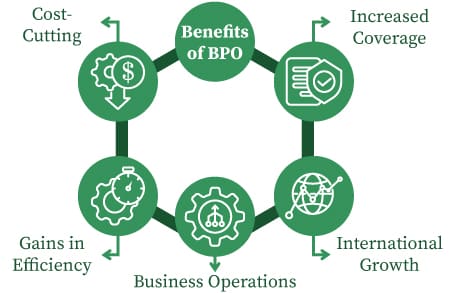
A BPO engagement with PayrollBD covers the cycle work an employer in Bangladesh must finish on a fixed calendar. That means appointment records, the service book, the register of workers, wage calculation, disbursement and the filings that follow. The panels below set out what moving that work changes for the employer.





Which Tasks Sit Inside the Scope?
The contract draws one boundary and repeats it in every schedule. The provider does the task and holds the record; the employer keeps the right to decide and the duty to comply. The table below reads across that boundary function by function, so a question about who does what has a written answer.
| Function | Performed by PayrollBD | Retained by the employer |
|---|---|---|
| Appointment | Draft the letter, open the service book | Approve the hire and sign the letter |
| Payroll run | Calculate wages, build the disbursement file | Fund the account, authorise release |
| Records | Maintain the worker and wage registers | Own the records, produce them on demand |
| Filings | Prepare the return and track the due date | Sign and submit in its own name |
Where a line is not written into the table, it stays with the employer by default.
Who Carries the Statutory Duty?
The employer carries the duty in every case, because outsourcing moves the work and not the obligation. The Bangladesh Labour Act, 2006 names the employer as the party who must issue the appointment letter, provide the service book, and keep the register of workers open to the Inspector. PayrollBD does those tasks and keeps the proof in the form the Inspector asks for.
| Obligation | Record it leaves | Source in the Act |
|---|---|---|
| Issue an appointment letter and identity card | Signed letter and photo identity card | Section 5 |
| Provide a service book at the employer cost | Service book held in the custody of the employer | Section 6(1) and 6(2) |
| Maintain a register of workers | Register open to the Inspector in working hours | Section 9(1) |
| Pay wages inside the wage period rule | Dated disbursement record per wage period | Section 123(1) |
The wording of each section is published by the Ministry of Law in the authentic English text of the Act. Reviewed by Eicra Binte Islam
How Does the Handover Run?
Handover runs in five stages, and each one closes with a document the employer can point to. Nothing moves to the next stage until the record from the last one exists. A gap is then visible on the day it happens, not at the end of a quarter.
- 1Scope and boundary. The functions moving across are listed in a schedule, with the retained duties named beside them.
- 2Record intake. Appointment letters, service books and the register of workers are collected and checked against the current headcount.
- 3Calendar build. Each wage period, filing and review date is fixed against the deadlines in the Act, then agreed in writing.
- 4Parallel cycle. One full cycle is processed beside the existing method, and the two outputs are compared line by line.
- 5Live run and review. The provider runs the cycle, and a booked review checks the register, the disbursement record and the filing proof.
The same five stages apply where the scope is a professional employer organisation arrangement rather than a back-office contract.
How Do You Assess a Provider?
Assessment is a document exercise before it is a conversation. Ask for the register formats a provider keeps, the deadline calendar it works to, and the name of the person who signs each review. The same three checks apply whether the scope is payroll, sourcing and procurement outsourcing, or the whole back office.
Ask each provider to show the register of workers format, the wage register format and the service book template it keeps. Read them against what section 9 of the Bangladesh Labour Act, 2006 requires to be recorded. A provider that cannot show the format on request will not produce the record on inspection.
Ask for the calendar the provider works to and read the dates against the Act. Wages fall due before the seventh working day after the wage period closes, and a final settlement before the thirtieth working day after termination. A calendar that does not name those two dates was not built from the statute.
Have the contract read for the line between doing a task and carrying the duty. The employer stays the party the Department of Inspection for Factories and Establishments deals with. The contract should say which records the provider holds, how fast it releases them, and what happens to them when the engagement ends.
When Do Wages Fall Due?
Two dates in the Bangladesh Labour Act, 2006 govern every payroll calendar in the country. Both are counted in working days and not in calendar days. A provider builds the cycle backwards from them, so that approval, funding and release each hold a slot before the statutory date arrives.
| Event | Statutory deadline | Provision |
|---|---|---|
| Wage period ends | Before the seventh working day that follows | Section 123(1) |
| Employment ends | Before the thirtieth working day that follows | Section 123(2) |
| Any wage payment | Made on a working day | Section 123(3) |
| A worker is engaged | Appointment letter and identity card given on engagement | Section 5 |
Each date is counted in working days, so the calendar is built from the working-day count and not from the month end.
What Records Does It Produce?
Each stage of the engagement leaves a document behind, and that set of documents is what an employer actually receives. The list below names the record types PayrollBD keeps for an engagement in Bangladesh. Each one is handed back in full when the contract ends.
- Appointment letterGiven to every worker before employment starts, with the identity card that section 5 requires beside it.
- Service bookOpened at the employer cost and held in the custody of the employer, as section 6 directs.
- Register of workersKept current and open to the Inspector during working hours under section 9.
- Wage registerDated against each wage period alongside the disbursement record, so the section 123 count can be checked.
- Filing proofAcknowledgement copies filed by date, so a request from the Department of Inspection for Factories and Establishments is answered from the file.
The same record discipline runs through our accounting and bookkeeping services, where the ledger is the record that has to hold.
What Do Employers Ask?
Four questions come up in almost every first conversation about moving a back-office function to a provider in Bangladesh. The answers below state the position first and the reason second, and they include the one limit an employer should know before signing.
How is PayrollBD accountable?
Accountability runs through the contract and the record set, not through a claim. The engagement schedule names each task the provider does, the record it leaves and the date it is due, and the employer can call for any of those records at any time. The statutory duty stays with the employer under the Bangladesh Labour Act, 2006, so the provider answers for the work and the proof, while the employer stays the party the Inspector deals with.
What does the BPO scope cover?
The scope covers the cycle work an employer must finish on a fixed calendar. That means payroll calculation and disbursement records, the register of workers, service books, appointment documentation, attendance checks, back-office data processing and the filings that follow each period. Client service, inbound and outbound contact handling, and procurement support run under the same contract where an employer asks for them. Anything needing a decision on headcount, pay structure or contract terms stays with the employer.
Which sectors does BPO serve?
PayrollBD runs back-office and payroll work for employers in banking and finance, energy and utilities, healthcare, insurance, retail and e-commerce, technology, media, communications, travel and hospitality, and manufacturing. The sector changes the vocabulary rather than the obligation, because the register of workers, the service book and the wage calendar read the same way in every one of them. Here is the honest limit: a sector licence or a regulator filing outside employment law stays with the employer, because the provider is not the licence holder.
How does an engagement start?
An engagement starts with a scope call and a record review, in that order. The employer sends the current headcount and the record formats in use, and PayrollBD returns a draft schedule naming which tasks move across and which duties stay. From there the sequence follows the five handover stages: scope and boundary, record intake, calendar build, parallel cycle, live run and review. Reach the team on +(88) 01511 002341 or at info@payroll.com.bd to open the first review.