If we review the current business landscape in 2026, we see that finding the best…
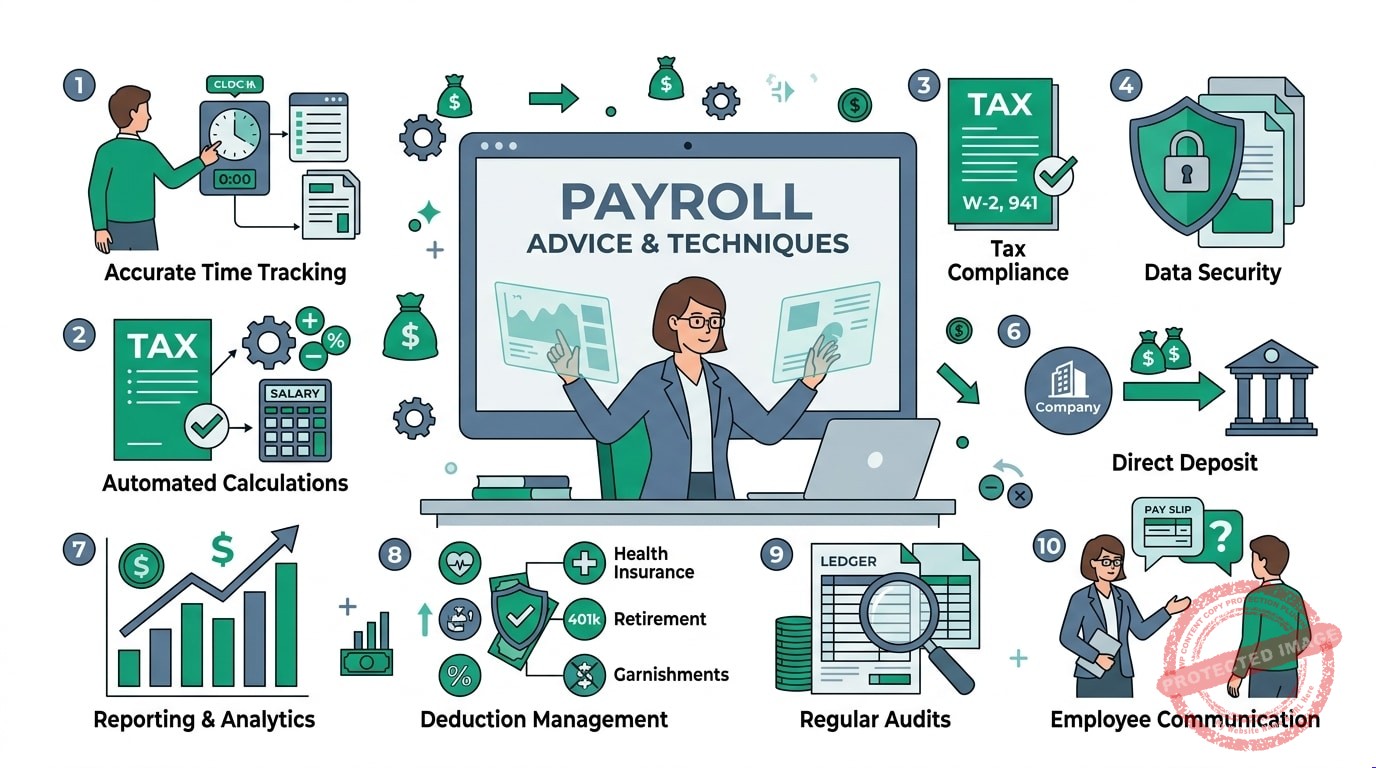
Accelerating Enterprise Payroll Efficiency Through Strategic Execution Systems
Executive Summary: Strategic Payroll Execution Systems
Accelerating enterprise payroll efficiency requires structured execution systems, automated technology portals, and rigorous statutory compliance. Specifically, automating monthly salary calculations, tax withholdings, and provident fund management eliminates administrative bottlenecks. Furthermore, enforcing total compliance under the Bangladesh Labor Act 2006 protects enterprise assets, eliminates tax audit penalties, and empowers business leaders to drive strategic commercial growth.
Navigating Enterprise Payroll Execution Systems
Direct Answer / Payroll Execution Standard:
Specifically, strategic payroll execution systems optimize corporate operations by automating monthly salary calculations, ensuring 100% statutory tax compliance, and providing secure cloud HRIS portals.
Specifically, strategic payroll execution systems optimize corporate operations by automating monthly salary calculations, ensuring 100% statutory tax compliance, and providing secure cloud HRIS portals.
First, rapidly growing corporate enterprises across Dhaka require streamlined administrative systems. For instance, organizations seeking integrated salary management tools can explore our payroll processing solutions to automate monthly compensation cycles and statutory tax filings efficiently.
Second, international corporations establishing local operational footprints can partner with our PEO services in Bangladesh or leverage our Employer of Record (EOR) service in Bangladesh for complete statutory protection and risk management.
Third, co-employment frameworks allow corporate leaders to maintain full strategic direction over daily team activities. Consequently, businesses enjoy complete administrative relief while fostering a supportive workplace culture.
Fourth, managing internal HR functions without dedicated infrastructure consumes valuable executive bandwidth. In addition, navigating complex tax withholdings and labor regulations creates unnecessary financial exposure for small and medium enterprises.
Fifth, partnering with a specialized PEO provider transfers routine administrative burdens to experienced professionals. Ultimately, companies accelerate market entry while maintaining sustainable competitive advantages.
5 Core Payroll Efficiency Pillars
Building an efficient enterprise payroll infrastructure relies on five essential operational pillars. Specifically, the structured cards below outline these core principles.
Efficiency Pillars
TAX AUTOMATION 01
Statutory Tax Withholding Automation
Specifically, calculating income tax withholdings automatically to eliminate human error and statutory fines.
DIRECT DEPOSIT 02
Electronic Direct Deposit Disbursement
Furthermore, executing bank transfers directly on fixed monthly schedules automatically.
LABOR LAWS 03
Bangladesh Labor Act 2006 Safeguard
In addition, managing mandatory provident fund deposits and gratuity accounts with total legal precision.
CLOUD PORTALS 04
Cloud HRIS Portal Integration
Moreover, providing self-service access where employees download payslips and tax stubs online.
DATA ARCHIVING 05
Encrypted Data Record Archiving
Therefore, securing historical salary records in ISO 27001 encrypted cloud servers for instant audit readiness.
Evaluating Practical Execution Factors in Payroll Systems
Executing efficient payroll processing systems requires evaluating data templates, security controls, and labor law updates. Specifically, addressing execution factors prevents processing errors.
Execution Factors
First, establishing fixed monthly payroll cut-off dates ensures salary calculations occur on schedule without last-minute delays. For instance, clear schedules streamline banking disbursements.
Second, centralizing employee data within encrypted cloud HRIS repositories guarantees instant audit readiness. Furthermore, role-based security settings protect confidential salary reports.
Third, adopting standardized data entry templates prevents manual calculation errors when processing employee bonuses and allowances. Consequently, organizations maintain 100% calculation accuracy.
Fourth, outsourcing routine administrative tasks to specialized PEO partners reduces internal HR overhead. Ultimately, executive bandwidth is redirected toward strategic commercial growth.
Fifth, conducting periodic compliance audits allows company leaders to verify statutory tax withholdings against updated government rules. As a result, legal risk is minimized.
Sixth, integrating employee self-service portals empowers staff members to download tax stubs and review leave balances online independently. In fact, self-service tools reduce routine inquiries.
Seventh, reviewing employment contracts regularly guarantees complete alignment with the Bangladesh Labor Act 2006. Therefore, companies prevent legal disputes during employee separations.
Eighth, utilizing real-time payroll reporting dashboards provides finance directors with clear visibility into labor expense trends, facilitating accurate strategic budgeting.
Ninth, conducting regular vendor performance audits ensures external payroll partners maintain high service standards consistently.
Tenth, combining structured HR processes with comprehensive payroll outsourcing creates a resilient operational foundation, allowing entrepreneurs to scale business ventures with total confidence.
Eleventh, implementing cloud time-tracking integrations prevents manual attendance entry errors across multi-location teams.
Twelfth, maintaining dedicated account manager support channels ensures rapid resolution of routine payroll inquiries.
5 Key Execution Strategies
Optimizing enterprise payroll operations requires implementing five core execution strategies. Specifically, the cards below detail these key approaches.
Execution Strategies
DATA TEMPLATES 01
Standardized Data Entry Templates
Specifically, utilizing standardized input templates to prevent attendance and allowance entry mistakes.
PROVIDENT AUDITING 02
Statutory Provident Fund Auditing
Furthermore, auditing employer provident fund contributions regularly to maintain total legal compliance.
ACCESS CONTROL 03
Role-Based Security Controls
In addition, restricting sensitive salary reports to authorized HR and finance personnel exclusively.
EOR INTEGRATION 04
EOR/PEO Co-Employment Integration
Moreover, partnering with external Employer of Record specialists to manage multi-location hiring.
SCALABLE ONBOARDING 05
Scalable Multi-Branch Onboarding
Therefore, onboarding new personnel across regional branch offices smoothly without administrative delay.
Manual In-House Spreadsheet Payroll vs. Automated Managed Payroll Execution Matrix
Comparing manual in-house spreadsheet payroll against automated managed payroll execution demonstrates major operational advantages. Specifically, the data table below contrasts key features.
Execution Comparison Matrix
| Payroll Processing Dimension | Manual In-House Spreadsheet Payroll | Automated Managed Payroll Execution |
|---|---|---|
| Statutory Audit Safety | Specifically, high risk of manual tax formula errors. | Guaranteed 100% statutory tax compliance. |
| Processing Speed | Furthermore, prone to manual formula breakage. | Flawless automated cloud HRIS accuracy. |
| Administrative Overhead Cost | In addition, heavy internal staff maintenance costs. | Predictable monthly per-employee pricing. |
| Executive Bandwidth Recovery | Moreover, executives distracted by payroll tasks. | 100% focus on strategic business growth. |
Optimizing HR Solutions with Payroll.com.bd
First, company leaders seeking complete statutory rules can read our resource on must-know facts about payroll processing.
Resource Links & Service Comparisons
Second, corporate executives evaluating outsourcing options can review our detailed analysis on what are the best payroll services to make an optimal choice.
Third, partnering with dedicated PEO and EOR specialists ensures rapid market entry and complete legal compliance across all Bangladeshi business operations.
Fourth, relying on experienced HR managers guarantees seamless salary distribution and statutory labor compliance.
Fifth, utilizing tailored HR solutions empowers corporate leaders to scale enterprise operations efficiently. Ultimately, organizations build resilient administrative foundations.
Frequently Asked Questions
Common Executive Questions
How can corporate enterprises accelerate payroll processing efficiency?
Specifically, enterprises accelerate efficiency by automating monthly salary calculations, adopting cloud HRIS portals, enforcing direct deposit disbursements, and integrating statutory tax withholdings.
What role does labor law compliance play in payroll optimization?
Furthermore, maintaining strict adherence to the Bangladesh Labor Act 2006 prevents tax audit penalties, manages statutory provident funds, and secures legal protection.
How do cloud HRIS portals streamline monthly payroll execution?
In addition, cloud HRIS portals centralize employee attendance data, automate tax stub generation, and provide self-service payslip downloads online securely.
Can outsourcing payroll lower total administrative overhead expenses?
Moreover, partnering with certified PEO and payroll specialists eliminates expensive software licensing fees and dedicated internal staffing overhead.
Related Posts